Updated October 2026
Ontario winters can bring extremely cold temperatures, and frozen water pipes are one of the most costly problems homeowners can face.
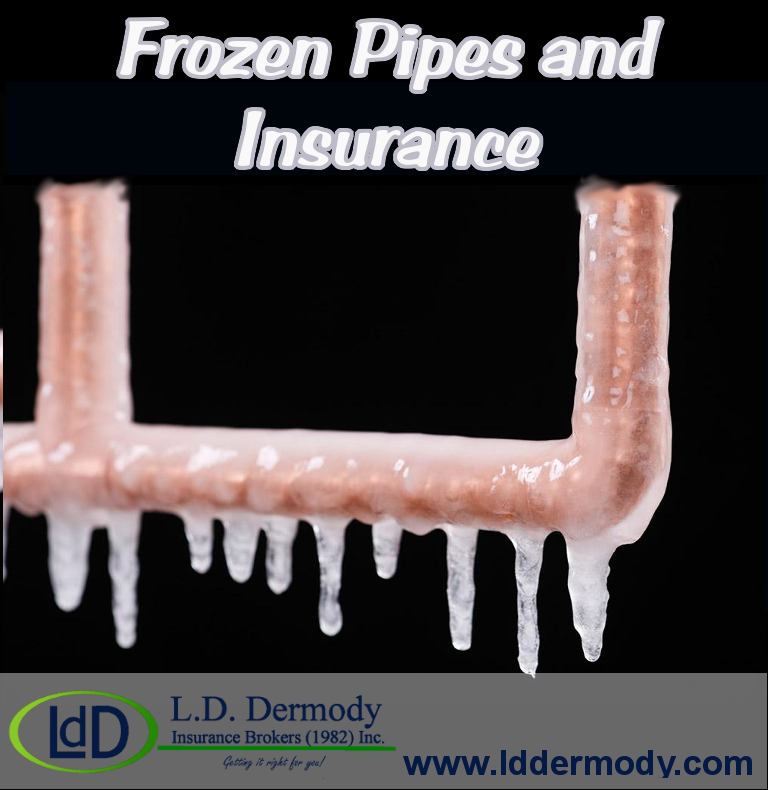
When water freezes inside a pipe, it expands and creates pressure that can cause the pipe to burst. Once the ice thaws, water may escape into walls, ceilings, floors and basements, causing extensive damage.
A burst pipe can result in thousands of dollars in repairs, particularly if the damage goes unnoticed for several days.
Many homeowners assume their home insurance will automatically cover this type of loss. However, coverage can depend on the circumstances, particularly if the home was left unattended during the winter.
At L.D. Dermody Insurance Brokers, we encourage homeowners to understand their insurance requirements before leaving their homes during the heating season.
Does Home Insurance Cover Frozen Pipes?
Most comprehensive home insurance policies provide coverage for sudden and accidental water damage caused by a burst pipe within the heated portion of the home.
For example, if a pipe unexpectedly freezes and bursts despite reasonable precautions being taken to maintain heat, the resulting water damage may be covered.
Depending on the policy, this could include damage to:
-
Walls, ceilings and flooring.
-
Cabinets and other built-in fixtures.
-
Furniture and personal belongings.
-
Other insured parts of the home.
However, there are important exceptions.
Insurance companies generally expect homeowners to take reasonable precautions to maintain heat and prevent pipes from freezing.
Special policy conditions may apply when a home is left unoccupied during the normal heating season.
What Happens if I Leave My Home Unattended During Winter?
This is where homeowners need to be particularly careful.
Many home insurance policies contain a freezing exclusion that applies when the homeowner is away during the usual heating season, unless specific precautions have been taken.
Depending on the insurance company and policy wording, those precautions may include:
-
Arranging for a competent person to enter the home and confirm that the heating system is operating.
-
Having the home inspected at intervals specified in the policy.
-
Shutting off the main water supply and draining the plumbing system.
-
Maintaining heat throughout the home.
Some policies provide alternative ways to satisfy the conditions, while others have different requirements.
There is no single inspection schedule that applies to every Ontario home insurance policy.
One insurer may require daily inspections, while another may permit inspections every few days. The wording of the particular policy determines what is required.
If you are planning a winter vacation, contact your insurance broker before leaving to confirm the conditions that apply to your coverage.
Is Leaving the Heat On Enough?
Not necessarily.
Many homeowners assume that as long as the thermostat is set to a reasonable temperature, they have satisfied their insurance obligations.
However, a furnace can stop operating because of a mechanical breakdown, power outage or other problem.
If no one enters the home for several days, the temperature could fall below freezing without anyone realizing it.
Some insurance policies specifically require regular inspections to confirm that heat is being maintained.
Simply leaving the furnace running may not satisfy those requirements.
A smart thermostat or temperature-monitoring system can provide an additional layer of protection, but it should not automatically be considered a substitute for physical inspections.
Ask your insurance broker whether your insurer accepts electronic monitoring as part of its requirements.
How Often Should Someone Check My Home?
The required inspection frequency varies by insurance company.
Some policies refer to specific periods of absence, while others require inspections at particular intervals during the heating season.
The safest approach is to confirm your insurer's requirements before travelling.
If someone is checking your home, they should do more than simply look at the property from outside.
A useful inspection includes:
-
Entering the home.
-
Confirming that the heating system is operating.
-
Checking that the indoor temperature is adequate.
-
Looking for signs of water leakage.
-
Checking areas where pipes may be exposed to cold.
-
Reporting any problems immediately.
It is also helpful to keep a record of inspections, including dates and any concerns identified.
Having a neighbour collect your mail or clear your driveway does not necessarily satisfy the insurance company's inspection requirements.
What if I Shut Off the Main Water Supply?
Shutting off the main water supply can significantly reduce the amount of water released if a pipe bursts.
However, it is important to understand the difference between simply shutting off the water and properly draining the plumbing system.
Water can remain inside pipes, toilets, fixtures and appliances even after the main valve has been closed.
Depending on the policy, an insurer may require both the water supply to be shut off and the plumbing system to be drained.
Certain heating systems and appliances also require special consideration.
If you are uncertain how to winterize your plumbing properly, consult a qualified plumber or heating contractor.
Do not shut off or drain a system in a way that could interfere with your home's heating or fire protection systems.
What if My Furnace Breaks Down While I'm Away?
A heating system failure is one of the most common reasons pipes freeze.
Suppose you leave your home for a week during January and the furnace stops operating on the second day.
If nobody checks the home, the indoor temperature could drop below freezing, causing pipes to burst.
Whether the resulting water damage is covered may depend on the policy wording and whether the required precautions were taken.
Even if the water damage is insured, the cost of repairing or replacing the furnace itself may not be covered if the failure resulted from ordinary mechanical breakdown or wear and tear.
This is another reason to arrange inspections and consider a monitored low-temperature alarm.
What Is the Difference Between an Unoccupied and a Vacant Home?
These terms are often misunderstood, and the distinction can be important for insurance coverage.
Temporarily Unoccupied
A home may be temporarily unoccupied when the residents are away on vacation but intend to return.
The home remains furnished and continues to be used as their normal residence.
Vacant
A home may be considered vacant when the occupants have moved out and do not intend to return, even if furniture or other belongings remain inside.
For example, a home awaiting sale after the owners have permanently moved elsewhere may be considered vacant.
The precise definition depends on the insurance policy.
Vacant properties present additional risks because damage may remain undiscovered for extended periods.
Most home insurance policies restrict or exclude certain losses involving freezing and water escape while a property is vacant, even where the insurer has agreed to permit the vacancy.
If your home becomes vacant, contact your insurance broker immediately.
Do not assume that a vacancy permit automatically restores all normal home insurance coverage.
What About Snowbirds Who Spend the Winter Away?
Ontario homeowners who spend several weeks or months in warmer climates should pay particular attention to their insurance conditions.
A home that remains furnished and is intended to be occupied again may not necessarily be considered vacant, but extended absences can still trigger special requirements.
Before leaving, snowbirds should confirm:
-
How frequently the home must be inspected.
-
Whether the main water supply should be shut off.
-
Whether the plumbing system must be drained.
-
Whether the insurer needs to be notified of the extended absence.
-
Whether any additional coverage restrictions apply.
It is better to clarify these requirements before travelling than to discover a problem after a claim occurs.
How Can I Prevent Pipes From Freezing?
There are several practical steps homeowners can take to reduce the risk of frozen pipes.
Insulate Exposed Pipes
Pipes in crawl spaces, garages, unfinished basements and near exterior walls are particularly vulnerable.
Proper pipe insulation can help reduce the risk of freezing.
Seal Drafts
Cold air entering through gaps around windows, doors or foundation openings can expose plumbing to freezing temperatures.
Maintain Your Heating System
Have your furnace or other primary heating equipment serviced regularly.
Keep Heated Air Circulating
Avoid blocking warm air from reaching areas where plumbing is located.
Disconnect Outdoor Hoses
Remove garden hoses before freezing temperatures arrive and winterize exterior water connections as appropriate.
Know Where Your Main Water Shutoff Valve Is Located
Being able to shut off the water quickly can help limit damage if a pipe bursts.
Consider a Low-Temperature Alarm
A monitored temperature sensor may provide an early warning if your heating system fails.
Arrange for Home Inspections
If you will be away, make sure someone can enter the property and check it according to your insurance company's requirements.
What Should I Do if a Pipe Freezes?
If you suspect that a pipe has frozen:
-
Locate the affected area, if it is safe to do so.
-
Shut off the main water supply if a leak is suspected or a pipe has burst.
-
Contact a qualified plumber for assistance.
-
Avoid using open flames, blowtorches or other unsafe methods to thaw pipes.
-
Take precautions around electrical equipment if water is present.
If water has already escaped, take photographs and contact your insurance broker or insurance company promptly.
Reasonable emergency measures may be necessary to prevent further damage, but major repairs should be discussed with your insurer whenever possible.
What Should I Do if a Pipe Bursts and Causes Damage?
If a pipe bursts, your first priority should be safety.
Shut off the water supply if it is safe to do so.
If water is near electrical outlets, wiring or equipment, stay clear of the affected area and contact a qualified professional.
Once the immediate danger has been addressed:
-
Photograph and document the damage.
-
Contact your insurance broker or insurance company.
-
Arrange reasonable emergency measures to prevent additional damage.
-
Keep receipts for emergency repairs and cleanup.
-
Retain damaged materials or document them before disposal, where practical and safe.
-
Follow the insurance adjuster's instructions regarding restoration and permanent repairs.
Prompt action can help reduce the extent of the damage and make the claims process easier.
Does the Same Coverage Apply to Cottages and Seasonal Properties?
Not necessarily.
Cottages and seasonal homes often have different insurance coverage and winterization requirements from principal residences.
Some seasonal property policies provide more limited water damage coverage or exclude certain freezing-related losses.
If your cottage is closed for the winter, make sure you understand the insurer's expectations for shutting off water, draining plumbing, maintaining heat and inspecting the property.
Never assume that the conditions applying to your principal residence also apply to your cottage.
Review Your Insurance Before You Leave
Frozen pipes can cause serious damage, but many losses can be prevented through proper maintenance, winterization and regular inspections.
More importantly, homeowners need to understand that their insurance company may impose specific conditions when the home is left unattended during the heating season.
At L.D. Dermody Insurance Brokers, we encourage our clients to contact us before leaving their homes for an extended period during winter.
We can help explain the requirements of your particular insurance policy so you can make appropriate arrangements.
Remember: Leaving the heat on does not necessarily mean you have satisfied your insurance company's requirements.
A few precautions before leaving home can help protect both your property and your insurance coverage.
This article provides general information about frozen pipes and home insurance in Ontario as of October 2026. Coverage, exclusions, inspection requirements and winterization conditions vary by insurance company and are subject to the terms and conditions of the applicable policy.