
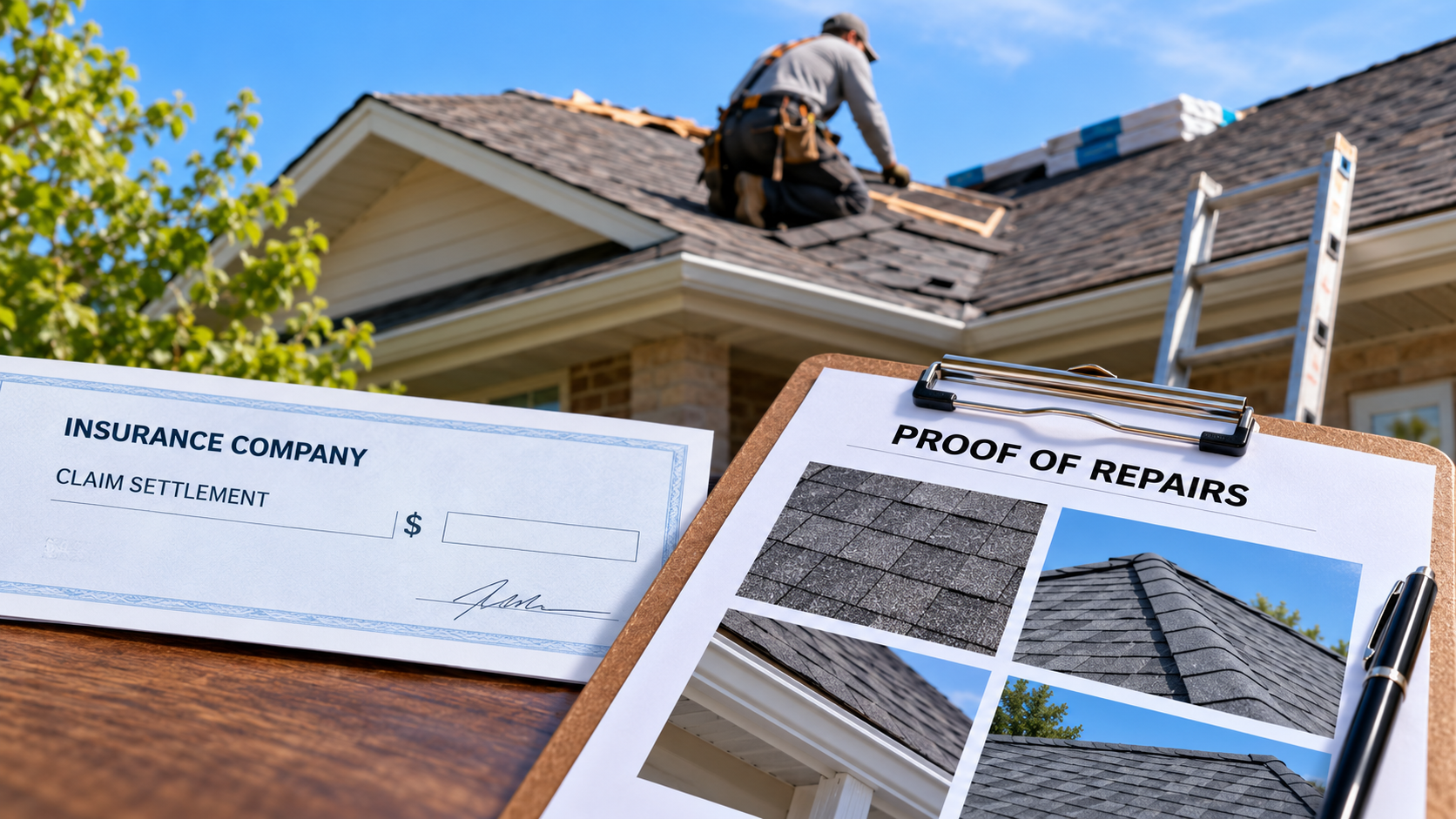
Understanding cash settlements, proof of repairs, and your responsibilities after an insurance claim
Imagine your home suffers damage during a windstorm. You report the damage to your insurance company, an adjuster assesses the loss, and the insurance company offers you a cash settlement.
You accept the payment, arrange to have the repairs completed, and consider the matter closed.
Then, several months later, your insurance company contacts you requesting photographs, receipts, or even an inspection report confirming that the repairs were completed.
You might understandably wonder: "The insurance company already paid my claim. Why do I have to prove what I did with the money?"
This is a common area of confusion for homeowners, and it highlights an important distinction between settling an insurance claim and maintaining your insurance coverage.
What Is a Cash Settlement?
When your home is damaged by an insured event, such as a windstorm, fire, or falling tree, your insurance company will assess the damage and determine the amount payable under your policy.
Depending on the circumstances, the insurance company may arrange for repairs through a contractor or offer you a cash settlement.
A cash settlement allows you to receive an agreed amount of money and make your own arrangements for the repairs.
Many homeowners prefer this option because it provides flexibility in choosing a contractor, scheduling the work, or coordinating additional home improvements.
However, accepting a cash settlement does not necessarily eliminate your responsibility to repair the damage.
While the settlement may resolve the financial portion of your insurance claim, your insurance company still has an interest in the condition of the property it continues to insure.
Claims and Underwriting: Two Different Responsibilities
One of the most important things homeowners should understand is that insurance companies have two departments with different responsibilities.
The Claims Department
When you experience an insured loss, the Claims Department is responsible for investigating the damage, determining what is covered under your policy, and arranging an appropriate settlement.
Once payment has been made and the claim is closed, the adjuster's involvement may be finished.
The Underwriting Department
The Underwriting Department has a different responsibility. Its role is to assess the risk associated with insuring your property and determine whether the insurance company is prepared to continue providing coverage, and under what conditions.
If your home has suffered significant damage, Underwriting may need confirmation that the damage has been properly repaired.
This is particularly important when the damage involves critical components of your home, such as the roof, electrical system, plumbing, or structural elements.
A claim being closed does not necessarily mean the insurance company considers the property to be in an acceptable condition for continued insurance coverage.
Why Would an Insurance Company Ask for Proof of Repairs?
Consider a situation where a windstorm damages a homeowner's roof.
The insurance company assesses the damage and provides a cash settlement. The homeowner then arranges for someone to repair the roof.
Several months later, the insurance company requests photographs, invoices, or an inspection report confirming that the roof was properly repaired.
Why?
From an underwriting perspective, the insurance company needs to know that the roof is in good condition and that the original damage has been addressed.
If damaged shingles, flashing, or other roofing components remain unrepaired, the home could be more vulnerable to future water damage.
An insurance company may also be concerned about the quality or extent of repairs, particularly if the homeowner cannot provide documentation showing what work was completed.
This does not necessarily mean the company believes the homeowner has done anything wrong. Rather, it is attempting to confirm that the property continues to meet its underwriting requirements.
What Happens if You Cannot Provide Proof of Repairs?
This is where homeowners can encounter unexpected difficulties.
Perhaps you hired a handyman who accepted cash and did not provide an invoice. Maybe you completed the repairs yourself. Or perhaps the work was done some time ago and you no longer have the paperwork.
Even if the repairs were completed properly, the insurance company may still require additional evidence.
Depending on the nature of the damage and the insurer's requirements, this could include:
-
Photographs showing the completed repairs.
-
Copies of contractor invoices or receipts.
-
A description of the work performed.
-
Confirmation from a qualified roofing contractor.
-
A professional inspection report confirming that the roof is in satisfactory condition.
In some circumstances, photographs alone may not be sufficient, particularly where the original damage cannot easily be identified or the extent of the repairs is unclear.
The insurance company may require a qualified professional to inspect the property and confirm that any outstanding damage has been addressed.
This can create an unexpected expense for a homeowner who believed the insurance claim had already been fully resolved.
Could This Affect Your Insurance Coverage?
Potentially, yes.
If an insurance company is unable to confirm that significant damage has been repaired, it may take underwriting action.
Depending on the circumstances, this could involve requiring repairs within a specified period, imposing restrictions or exclusions on coverage, or declining to renew the policy.
For example, an insurer concerned about the condition of a roof may propose an endorsement limiting how future roof losses are settled.
An Actual Cash Value Roof Limitation Endorsement may change the basis on which certain future roof claims are paid, potentially taking depreciation into account rather than providing replacement cost coverage.
The precise effect depends on the wording of the endorsement and the insurance company involved.
It is important to understand that such an endorsement is not necessarily a temporary exclusion for all future roof damage. Homeowners should review the actual wording to understand what coverage remains available and how a future claim would be settled.
In more serious situations, unresolved property conditions could affect the insurance company's willingness to continue insuring the home.
What About Future Claims?
Another important consideration is what happens if the same area of your home suffers damage again.
Suppose your roof was damaged in a windstorm and you received a cash settlement, but the repairs were never completed.
A year later, another storm causes additional damage to the same area.
The insurance company may need to determine which damage resulted from the new storm and which damage existed before the second loss.
Insurance is generally intended to cover new insured losses, not damage that was previously settled and left unrepaired.
As a result, the existence of unrepaired damage could complicate a future claim, particularly where the original and new damage overlap.
This is another reason why keeping accurate records of completed repairs is so important.
Five Things You Should Do When Accepting a Cash Settlement
1. Understand what you are agreeing to.
Before accepting a cash settlement, ask your insurance adjuster what damage is included in the settlement and whether any additional conditions apply.
2. Confirm whether proof of repairs will be required.
Ask whether the insurance company expects photographs, invoices, or an inspection report once the work is completed. Ideally, obtain the requirements in writing.
3. Use qualified contractors where appropriate.
For significant roof, electrical, plumbing, or structural damage, consider hiring appropriately qualified professionals who can provide written documentation of the work.
4. Keep photographs and receipts.
Take photographs before, during, and after the repairs. Retain contractor invoices, receipts, inspection reports, and any warranties. These records may be valuable if questions arise later.
5. Keep your insurance broker informed.
Once the repairs are completed, advise your broker and provide any requested documentation. Your broker can communicate with the insurance company to determine whether the underwriting requirements have been satisfied.
The Bottom Line: A Settled Claim Is Not Always the End of the Story
Accepting a cash settlement can be a convenient way to resolve an insurance claim, but homeowners should understand that receiving payment and satisfying their insurance company's underwriting requirements are two separate matters.
Your insurance company may have settled the financial obligation arising from the loss while still requiring confirmation that your home has been properly repaired.
The best time to understand these requirements is before accepting the settlement, not months later when the insurance company asks for proof.
At L.D. Dermody Insurance Brokers Ltd., we believe that understanding your insurance coverage and responsibilities is just as important as having the right policy in place.
If you have experienced property damage, are considering a cash settlement, or have received a request from your insurance company for proof of repairs, contact our office. We can help explain the insurer's requirements and assist you in navigating the process.
This article provides general information about property insurance in Ontario. Coverage, claims settlement procedures, underwriting requirements, and policy conditions vary by insurance company and policy wording.